Kling 4.0 vs MiniMax H3: Which Parts of a Café Window Shot Should You Generate?

A café window can make an attractive short shot and a confusing production request. A cup sits inside. A tree appears as a faint reflection. The camera moves along the pavement. “Make the window cinematic” leaves all three relationships unspecified.
For a useful Kling 4.0 vs MiniMax H3 decision, first decide which parts of that image you are willing to invent and which must remain fixed. This guide uses an original illustrated café concept, not model outputs or a claim that either model has been tested on reflections.
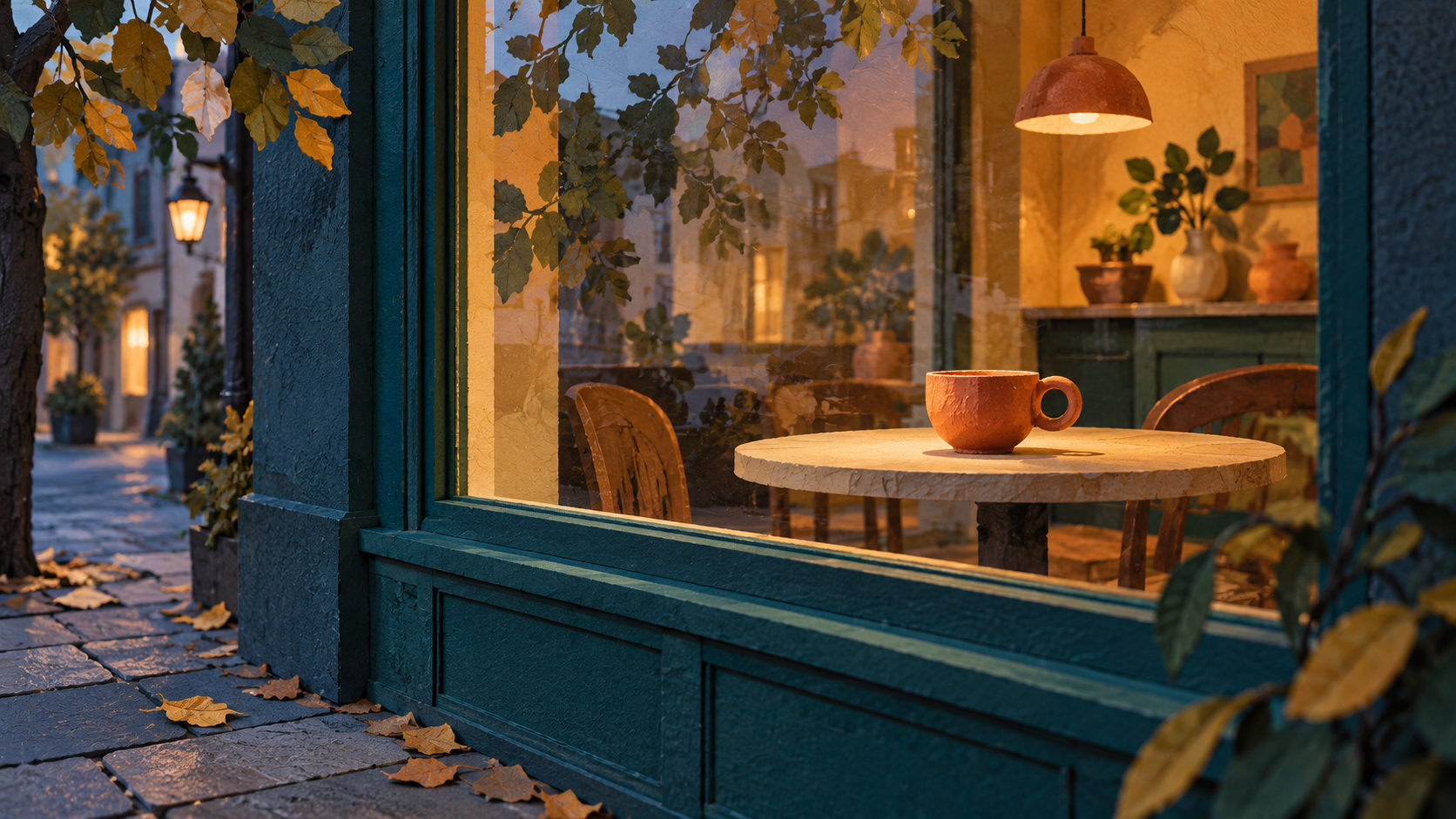
The planned shot contains an interior scene, glass reflections and a viewpoint. Treat them as separate intentions before choosing how to make the image.
Describe the interior, glass and viewpoint separately
Begin with the interior. Our terracotta cup should stay on the same table beside the teal window frame. Its shape and position matter more than a dramatic change in lighting. If the cup represents a specific real product, a loose likeness may be unacceptable; decide that before choosing a generative route.
Next describe the glass. The reflection is a secondary view of the exterior, not a second tree growing inside the café. It should not become a solid object blocking the cup. You may want a quiet suggestion of leaves rather than a busy, detailed street scene.
Finally, choose the camera's job. A locked view is a simpler creative request than a moving view in which the visible interior and reflected exterior both change. If movement is essential, specify what the audience should learn from it: perhaps the cup emerges from behind a window mullion. Do not add a lateral move merely because the prompt can contain one.
Write the intention in three lines:
Keep: the cup, table and teal window frame.
Change: a small amount of reflected leaf movement.
View: a fixed street-side composition for the first study.
This does not guarantee a physically accurate result. It makes the intended relationship inspectable.
Compare the workflow claims, then the actual entrance
Kling's official introduction discusses multimodal and subject references, keyframes and targeted video edits. For this scene, the useful question is whether a chosen route lets you retain the cup and composition while defining a limited change.
MiniMax's H3 introduction presents a unified context across text, images, video and audio, with reference and editing relationships described through language. Here, the useful question is whether your existing window image or footage can be supplied in the intended reference or editing role.
Neither description proves that its model will keep a reflection attached to the correct surface. Nor does the word “editing” prove that an interface has an independent reflection-layer control. Inspect the actual input route and its documented controls; do not invent a mask, layer selector or preservation switch that is not there.

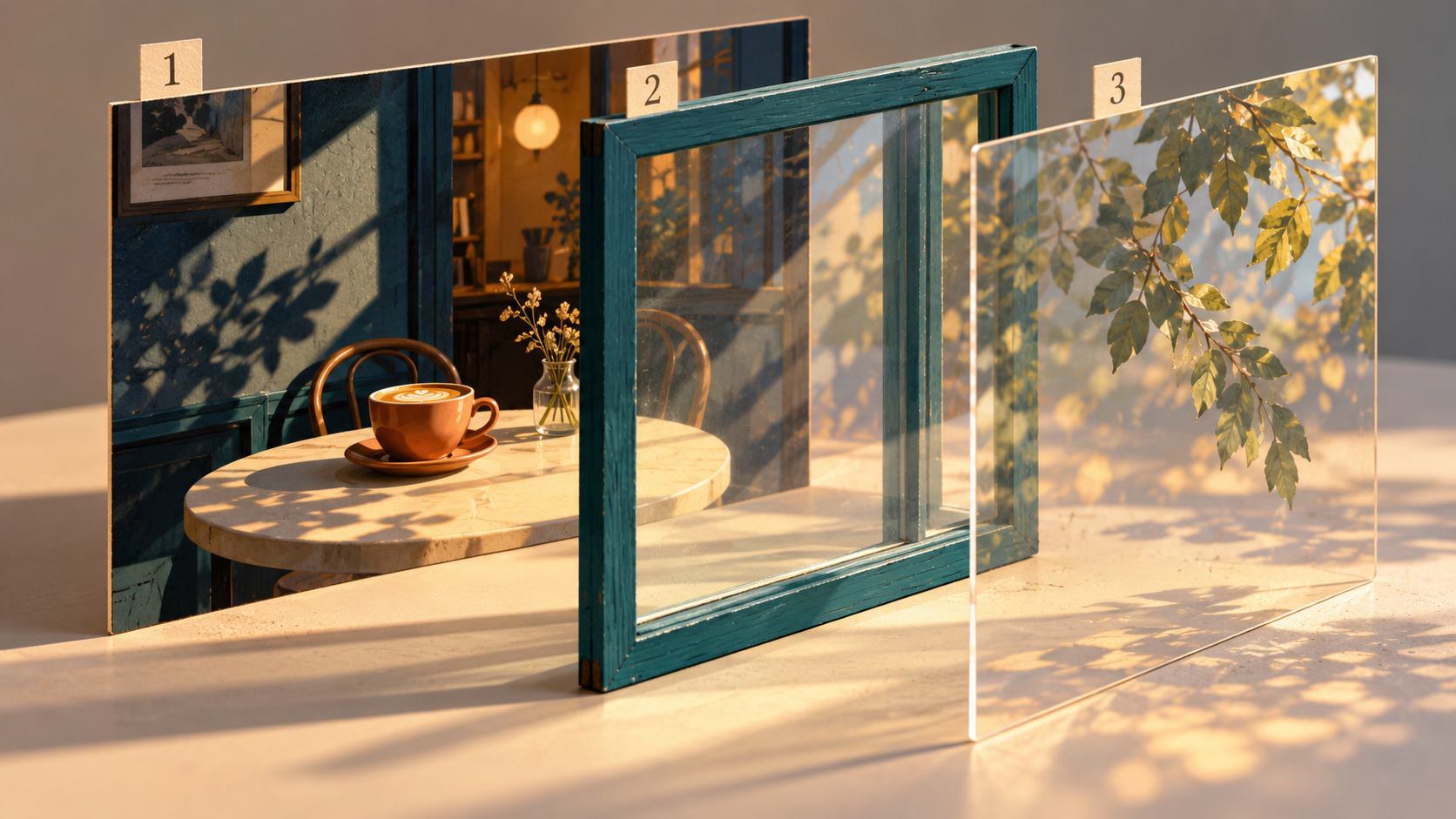
This authored layer sketch separates things to keep from things to move. It is a production-planning aid, not a physical simulation or either model's output.
Choose one of three production routes
Generate the whole shot when the scene is a concept. This can be a reasonable way to explore mood, framing or the general relationship between interior and exterior. Accept that the window, cup and reflection may all be interpreted together. Review them together too: a pleasing reflection does not compensate for a cup that changes identity.
Separate layers when a supplied object must remain recognizable. A conventional composite can place a retained interior image beneath a restrained reflection element. You can then adjust opacity, framing and timing without asking a model to solve every part of the image simultaneously. This requires editing work; a generated background or motion element is only one possible ingredient.
Record the window when the shot must document reality. If the purpose is to show an actual venue, installation, product demonstration or event, the recorded relationship between glass, scene and camera may be the thing the viewer needs. A concept animation should not quietly replace that evidence. Capture the view, then decide which ordinary edit improves its presentation.
For our fictional café, choose a locked whole-shot concept if mood is the goal. Choose a composite if the supplied cup design is non-negotiable. Choose a recording if the café itself is the subject of a factual feature. The decision changes because the purpose changes, not because one model name wins every case.

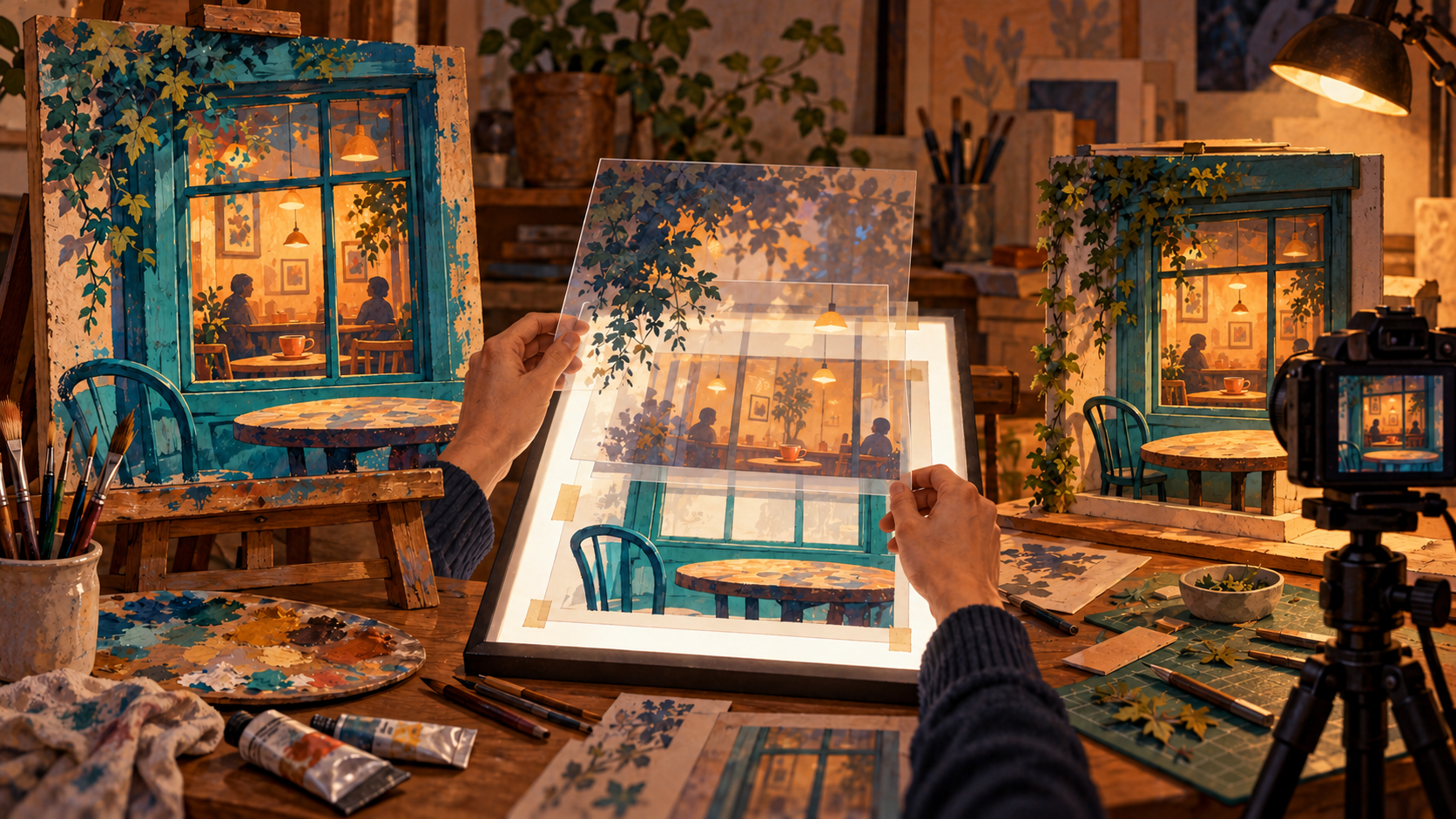
Whole-shot generation, compositing and real recording answer different needs. Choose from the information that must remain trustworthy.
Inspect the relationship before polishing the look
When you have an actual candidate, pause at its beginning, middle and end. Check the cup against the window frame. Check whether the reflected leaves remain a secondary layer. Look for a reflection that turns into a solid branch, an interior object that follows the exterior, or a window edge that bends while the camera is meant to stay still.
Record what is visibly wrong in ordinary terms: “The cup shifts relative to the table,” rather than “the result lacks realism.” That description helps you choose a smaller revision, a simpler request or a different production route.
Once you have chosen which parts of the shot to create, take the cafe brief to the Flyne AI Kling 4.0 page to develop the video concept. Describe the interior, reflection and viewpoint separately, and keep the cup-to-window relationship at the center of the brief. That gives you a clear basis for deciding whether a draft serves the shot or whether a composite or recording would explain it better.
Disclosure: This article is provided by the Flyne AI brand team.
The finished brief should name what stays, what changes and what the image must truthfully represent. With those decisions made, comparing input routes becomes a practical production choice rather than a guess about which model can repair an undefined shot.